Role: Led UX strategy, flows, and interaction design.
Methods: Workflow audit, Session analysis, Ideation and UI design
Tools: Figma and FullStory
Deliverables: AI creator search optimizations
Overview
Bazaarvoice platform powers a network of 13,000+ brands and retailers, reaching millions of shoppers on a monthly basis, including major names like Walmart, Samsung and Nestlé.
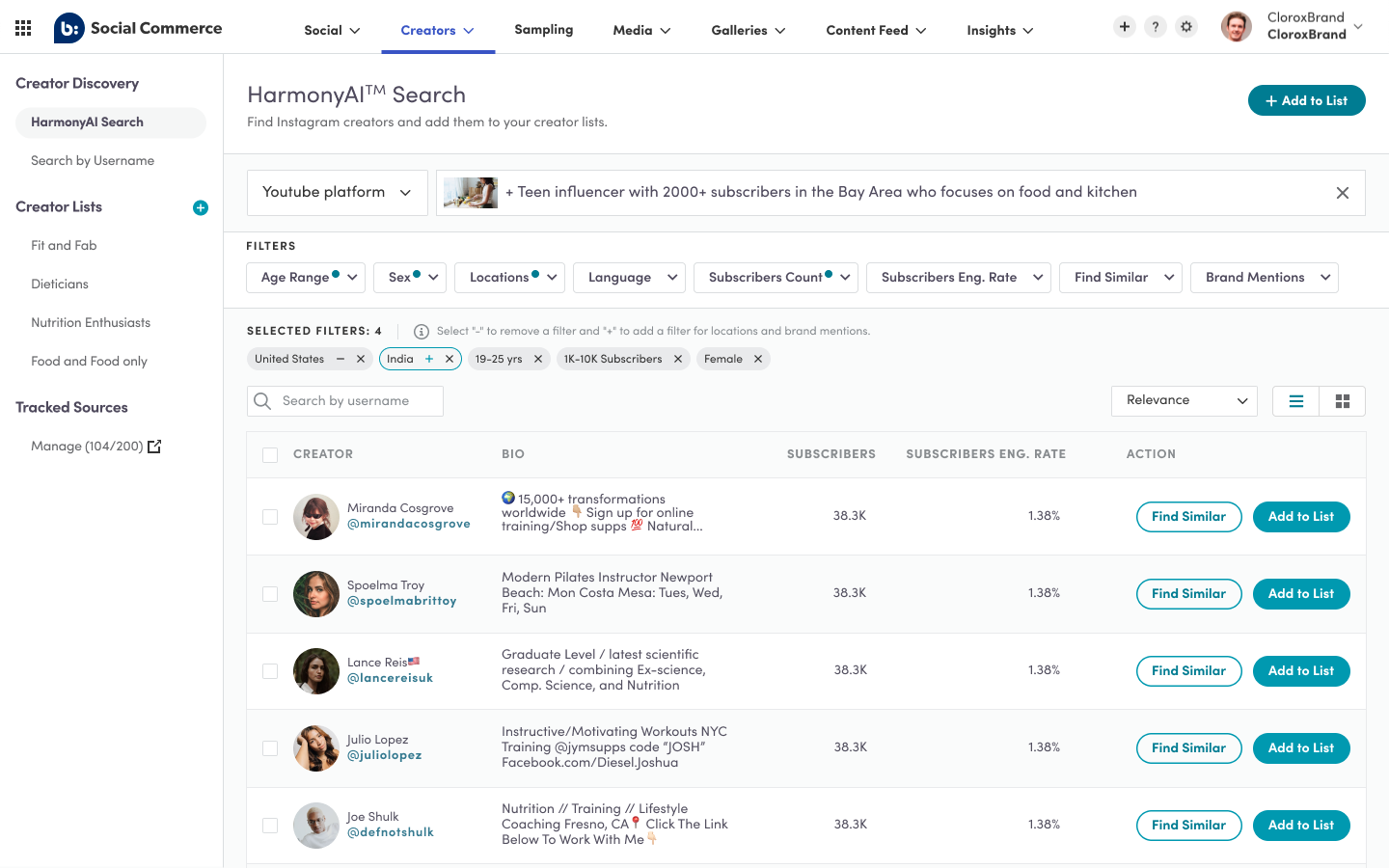
Vibe’s AI Creator search lets brands find creators across TikTok, Instagram, and YouTube using text prompts or reference images. The search itself worked, but the workflow around it didn’t. Users could find creators; they couldn’t efficiently vet and act on them without leaving the flow. This project closed that gap.
Problem Statement
Our primary user a brand marketer scaling influencer campaigns, represented by the persona Samantha was hitting discovery fatigue.
The existing workflow forced users into constant back and forth navigation.
> Run a search
> Open a creator’s profile in a new tab to vet metrics
> Return to results to add them to a list
> Repeat
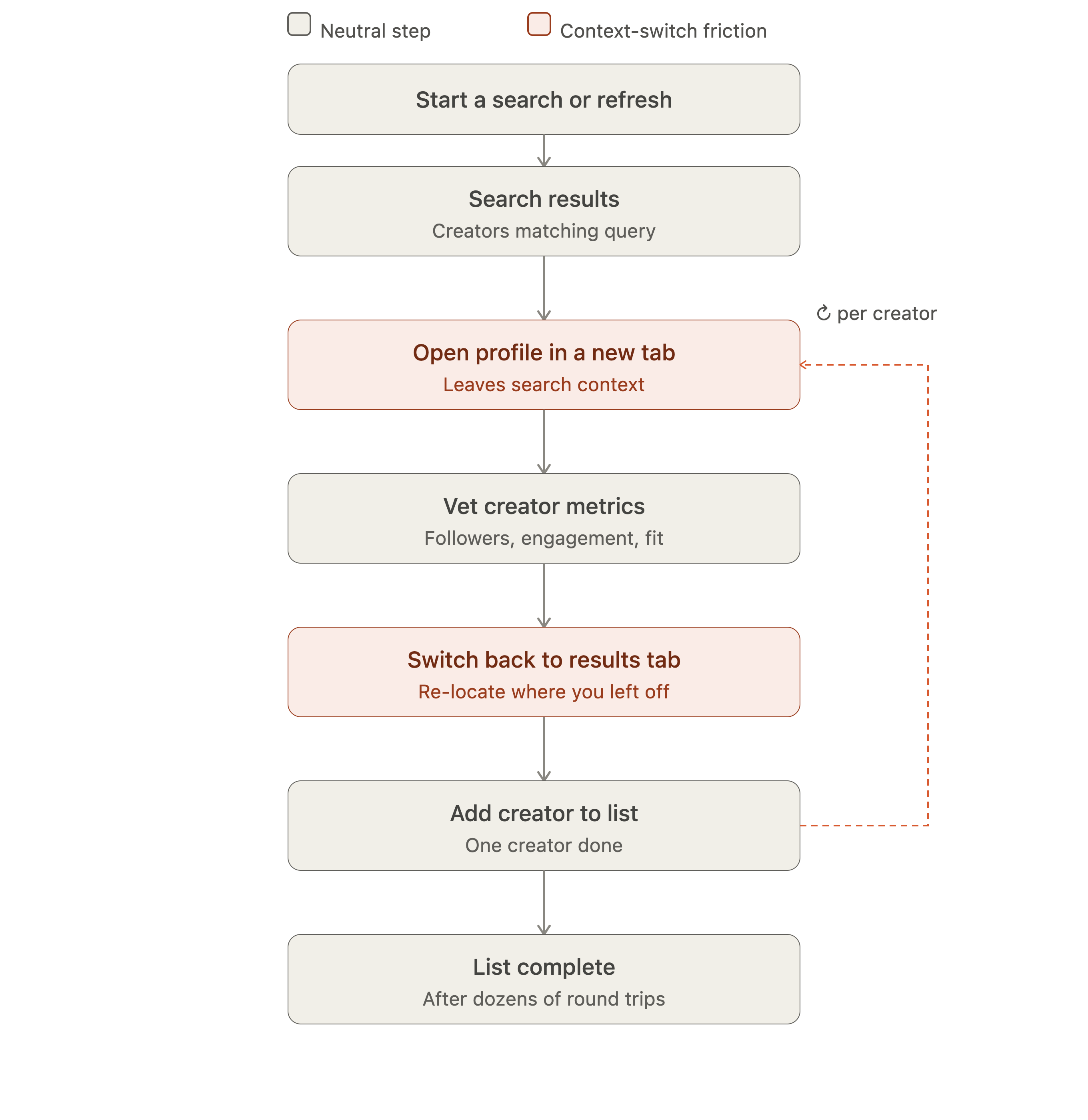
Every creator required a full context switch. At the volume Samantha operates at, refreshing rosters and scaling campaigns across markets, that loop wasn’t just annoying; it increased the risk of customer churn in favor of faster-moving competitors. The fix wasn’t a smarter search algorithm. It was collapsing Search → Vet → Add into one continuous surface.
Design Process
I led design on this from problem framing through scoped UX, working alongside product and engineering to keep the solution buildable within a single release window rather than a multi-quarter bet.
Solution Discovery:
- Workflow audit of the existing Search → Profile → List path to map every point where users left the results view.
- Behavioral read on session patterns: how much time was lost per creator vetted, and where drop-off clustered.
- Review of client requests and support signals pointing to “too many clicks to build a list” as a recurring complaint.
Framing the opportunity: Rather than treat this as a search-quality problem, I reframed it as an in-context vetting problem; the search was fine, the interruption was the cost. That reframe is what pointed the solution toward a drawer based pattern instead of a new page or modal-heavy flow.
Scope
Each solution was designed to address a specific user need..
Vet a creator without losing search context
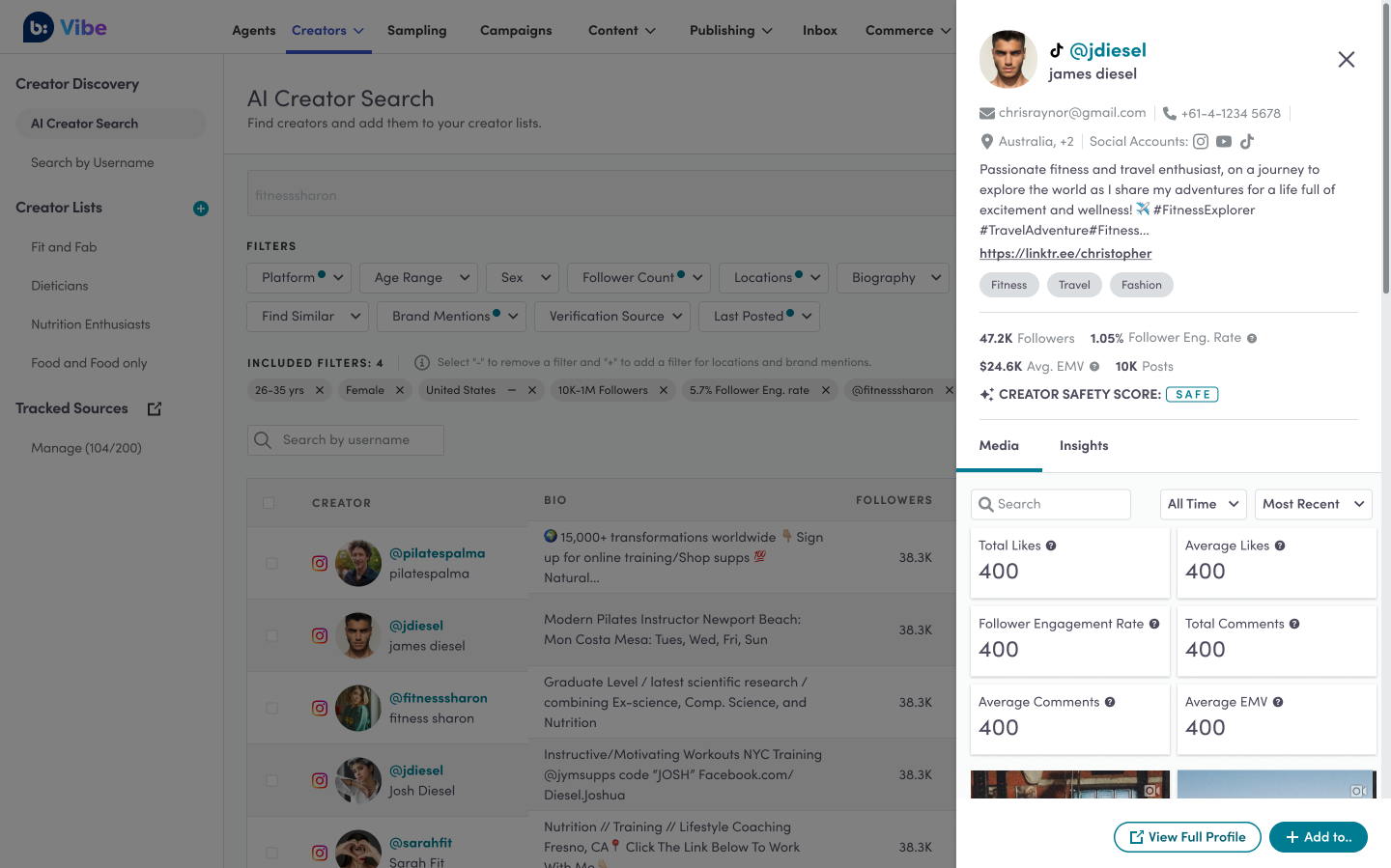
Quick Vet Drawer | a slide out panel showing Insights/Media tabs, reusing existing profile components so it shipped faster and stayed visually consistent
Get unstuck on an empty list
Creators you might like | empty state recommendations generated from the user’s own search and list history, so a blank list isn’t a blank slate
Scale a working list without repeating search from scratch
AI Auto-Expand | averages the demographic/content profile of a user’s current list and surfaces ~20 similar creators to extend it
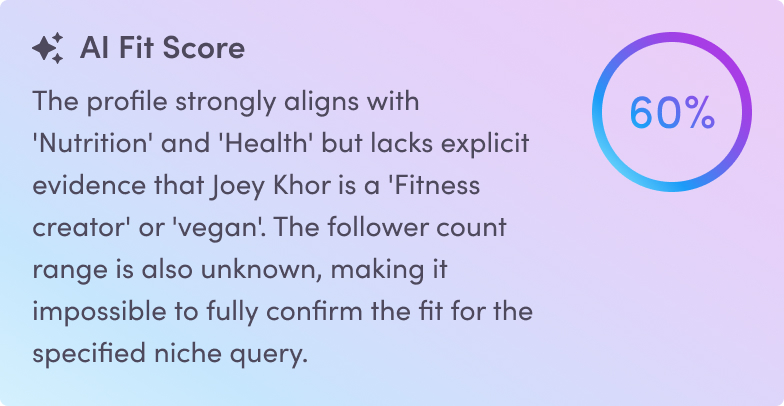
Add the AI Fit Check
AI Fit Check | Added a component to the profile side view, allowing brands to quickly see how well this creator matches their search criteria
Design Approach
The roadmap was guided by a single principle: prioritize improvements that remove the most user friction while minimizing implementation risk.
The Quick Vet Drawer shipped first because it eliminated the highest-friction behavior, repeated tab switching during creator evaluation and validated the core workflow with minimal engineering effort.
AI-Generated summary: A button on each creator’s column that generates an instant AI overview of who they are, covering the expected opportunities and fit for your brand, So you can vet creators without opening their profiles.
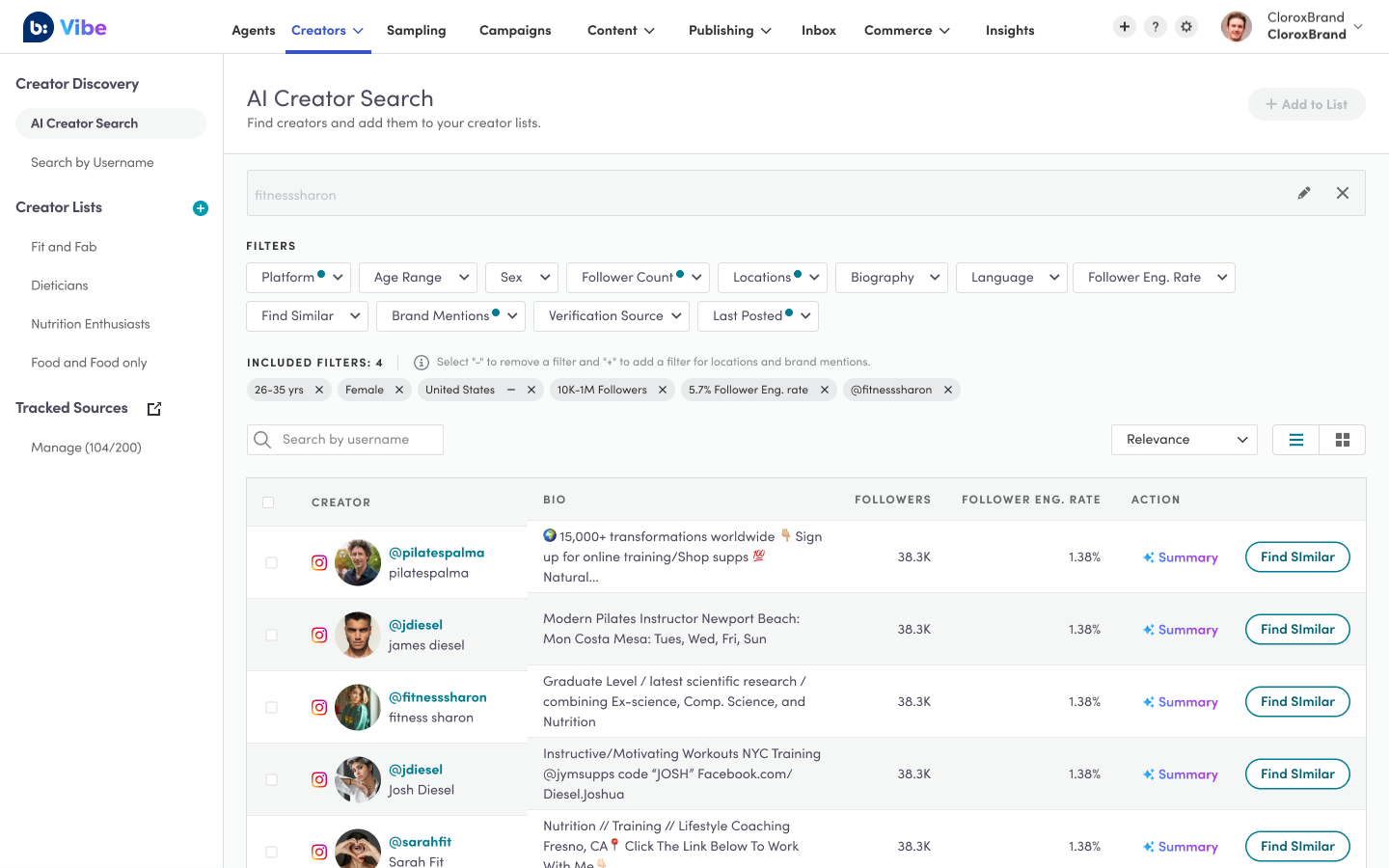
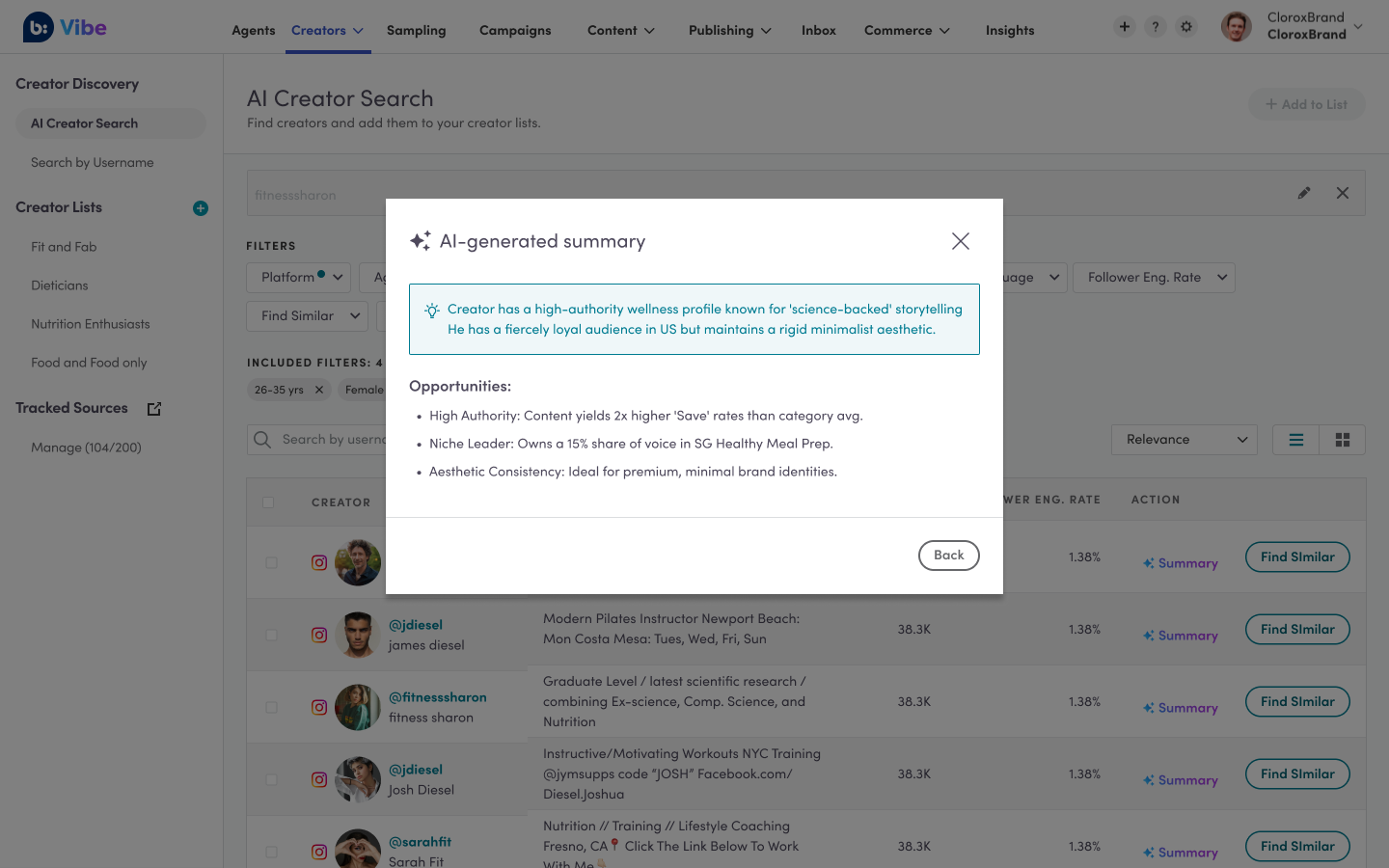
Discovery enhancements such as recommendations and query suggestions were planned for the next phase once user behavior could inform their relevance.
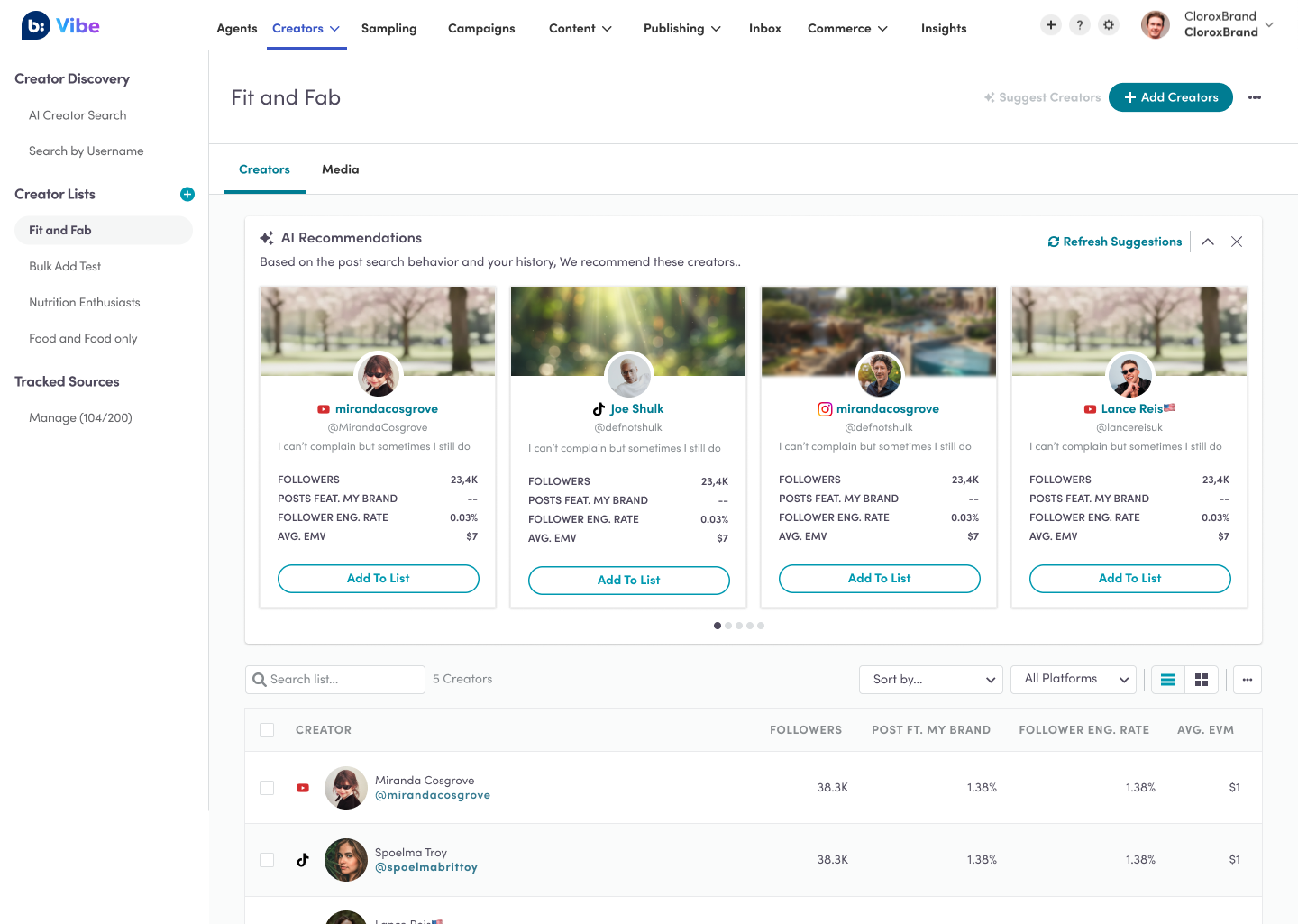
The AI Fit Check was intentionally deferred. While valuable, it introduced additional latency and complexity without solving a primary user pain point, making it a stronger candidate for a later iteration after the core experience was validated.

Success Results
Success was defined through directional product metrics rather than launch results:
- Reduced time to build creator lists by removing the tab-switch loop, measured via session duration on “Add to List” workflows, before vs. after.
- Increased adoption of Quick View and Similar Creators, measured through repeat usage rather than one-time discovery.
- Improved qualitative feedback on the Search & Discovery experience, based on structured feedback collected from internal users before launch.